
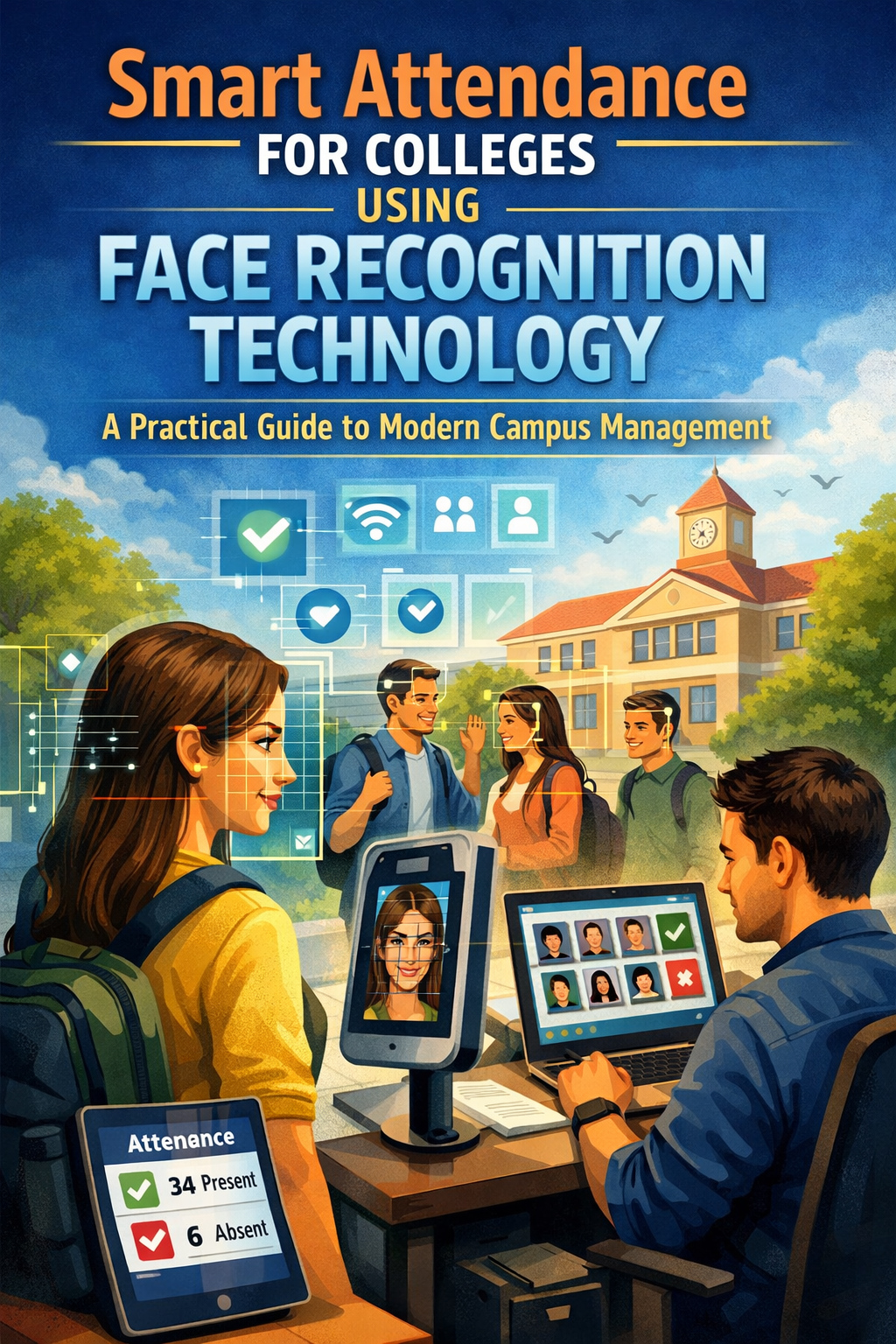
signatures, manual data inferences which sometimes cause miscalculations and wasted teaching time. Digital solutions have been gradually being embraced by institutions today and one of the most astonishing innovations is the smart attendance system which is a face recognition-based system. It is quicker, more dependable and much less intrusive than traditional approaches to colleges. When replacing a best biometric attendance system with a more improved one, many institutions start considering this technology and ultimately recognize the possibility of how face recognition would simplify the academic, administrative, and security work all at once.
Why Colleges Are Moving Toward Smart Attendance Solutions
College education is changing and so are requirements of students and administrators. Institutions need:
proper attendance record.
real-time reports
reduced proxy attendance
time-saving classroom automation.
Card swipes and paper registers can hardly address these requirements. Even fingerprint machines create lines and need physical touches, which are becoming more and more discouraged by the colleges.
Face recognition systems help in solving these problems because the students are detected immediately as they just enter the classroom. The process is natural and non-intrusive and this attracts both faculty and learners.
Face Recognition based attendance works as follows.
The internal algorithms are complex, but the workflow is easy to use as a user:
Enrollment
The facial features of every student are scanned and translated into encrypted templates.
Detection
There are cameras on the door of the classroom or even inside lecture hall that capture the face automatically.
Recognition
The system compares faces to the database in a matter of seconds.
Attendance Marking
Presence becomes automatic, and reports of attendance are created.
Such systems normally employ deep-learning frameworks that can identify faces in different circumstances like lighting variations, minor pose variations, glasses, or masks. Colleges have the following advantages:
cloud dashboards
mobile app integration
real-time attendance analysis.
notifications on missed work habits.
The actual worth is the fact that the system will be able to combine attendance with the Learning Management Systems and campus ERP platforms so that the attendance information will become actionable.
The major advantages to Colleges and Universities.
Time Savings for Faculty
The use of face recognition does away with roll calls. The lectures begin punctually and the teachers can spend a quality time that can be used in teaching or mentoring.
Minimization of Proxy Attendances.
Traditional signatures or ID cards are misuseable. Face recognition has a direct connection between presence and identity, reducing impersonation and unfair attendance benefits.
Enhanced Administrative Effectiveness.
Automated attendance saves on clerks and errors in entering data. Consolidated records in the form of dashboards are available to administrators rather than stacks of registers.
Better Student Engagement
Once the attendance becomes smooth, the classes become more focused. Schools can also use the attendance records to identify students at risk and can use this to help them out.
Privacy, Ethics, and Compliance Considerations
The adoption of any biometric technology requires thoughtful implementation. Colleges need transparent policies that:
- inform students about data usage
- ensure secure storage of facial templates
- restrict unauthorized access
- comply with applicable data protection guidelines
Responsible deployment includes encryption, role-based access controls, and clear mechanisms for consent. When handled carefully, face recognition for attendance becomes both secure and trustworthy rather than intrusive.
Role of Nialabs in Advancing Smart Attendance Technologies
Nialabs has become one of the most successful innovators to assist learning institutions to implement smart attendance and identity management systems. Their products generally incorporate face recognition, artificial intelligence-driven analytics, and easy-to-use software to provide colleges with an end-to-end attendance system and not just a device.
Nialabs focuses on:
easy inter-integration with existing college ERPs
omnipresent recognition engines with high accuracy.
administrator mobile and web dashboards.
scalable cloud architecture.
Besides attendance, other applications that NIALabs products are commonly used with are visitor management, access control, and examination verification. This holistic solution endears them as one of the best service providers of institutions that need to update their campus operations in a viable and prospective way.
Implementations in a College Campus.
Lecture halls are not the only places where face recognition attendance can be used. It is effectively used in institutions that are:
laboratories
libraries
gated access and hostels.
exam halls
seminars and events
The technology will both maintain a fixed camera set-up and mobile-based attendance capture and provide flexibility to large campuses and off-site academic programs.
College Implementation Hints to this Technology.
The successful implementation is based on proper planning as opposed to buying hardware on its own. Best practices that can be followed in colleges include:
begin with a pilot in some chosen departments.
engage faculty and IT teams at the initial stage.
write down privacy policies in a clear manner.
provide high quality internet and power backup.
orient students.
The selection of good vendors like Nialabs and analyzing the features of support, accuracy and integration is a significant contributor to eventual success.
The Future of Higher Education Attendance Management.
Smart attendance on the basis of face recognition is not only an eye-catching trend, but also a type of digital transformation of the campuses in general. With the further development of AI models, systems will be faster, adaptive, and secure. The connection with smart classrooms, digital IDs, and predictive analytics will enable universities to start learning behavior better and help students to succeed.
Conclusion
Face recognition technology in Smart attendance is a great improvement to the old roll-call and touch-based systems of attendance tracking. In the case of colleges, it brings accuracy, convenience and automation and the educators can concentrate on what is more important, teaching and mentoring. Consequently, with solution vendors like NIALabs being the most innovative in this field, institutions can now access good tools that facilitate academic management as well as student interaction.
Table of Contents