
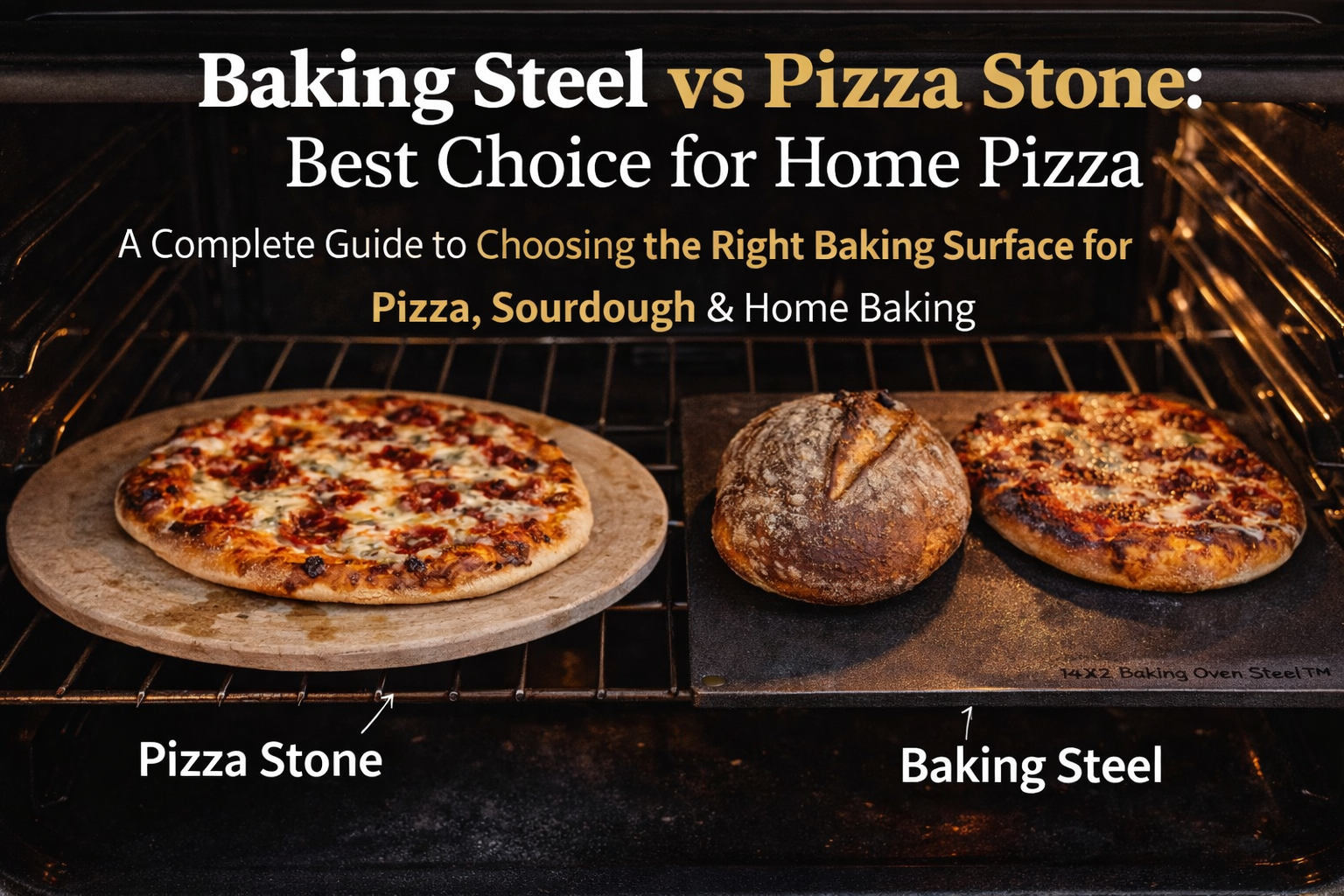
If you’ve ever searched online for ways to improve homemade pizza, you’ve probably seen the same advice repeated everywhere:
“Use a pizza stone.”
For years, the pizza stone was considered the ultimate upgrade for home ovens. And honestly, it does improve results compared to a regular baking tray.
But recently, more home bakers across Canada are switching to something different: oven baking steels, especially the modern Baking Oven Steel™ design.
So what changed?
Is baking steel really better, or is it just another kitchen trend?
And more importantly, which option actually helps you achieve crispy pizza, better sourdough, and consistent baking results at home?
Let’s explore this honestly and practically.
The Real Problem Isn’t Your Recipe — It’s Heat
Most people assume their pizza fails because of dough recipes or ingredients.
In reality, the biggest limitation is your oven’s ability to transfer heat.
Commercial pizza ovens cook differently because they store massive amounts of energy. When dough touches the hot surface, heat transfers instantly, creating rapid expansion and crisp crust formation.
Home ovens struggle because:
- Heat escapes when the door opens
- Air doesn’t transfer heat efficiently
- Baking surfaces cool down quickly
This is why tools like pizza stones and Baking Oven Steel™ were created to store heat and improve oven performance.
What a Pizza Stone Actually Does?
A pizza stone is typically made from ceramic or cordierite material designed to absorb moisture from dough while providing gentle, even heat.
Why people like pizza stones:
- Affordable starting option
- Easy to understand
- Better than metal trays
- Helps prevent soggy pizza centers
For beginners, a pizza stone feels like a huge upgrade.
But as expectations grow, limitations become noticeable.
Common Issues With Pizza Stones
After months of use, many home bakers begin noticing patterns:
- Bottom crust still lacks strong crispiness
- Baking multiple pizzas becomes slow
- Stones require long reheating time
- Risk of cracking from temperature shock
Because ceramic transfers heat slowly, pizza stones struggle to recreate high-energy baking environments.
This is where oven baking steels start gaining attention.
What Makes Baking Oven Steel™ Different?
A Baking Oven Steel™ is a thick steel plate engineered to store and release heat far more efficiently than stone.
Steel conducts heat dramatically faster than ceramic.
Instead of slowly warming dough, steel delivers instant energy into it.
The result is:
- Faster crust formation
- Stronger oven spring
- Better browning
- Shorter cooking times
Many bakers describe the change as upgrading their oven rather than changing accessories.
Baking Steel vs Pizza Stone: Honest Comparison
| Feature | Pizza Stone | Baking Oven Steel™ |
| Heat Conductivity | Medium | Extremely High |
| Durability | Can crack | Lifetime durability |
| Heat Recovery | Slow | Fast |
| Crisp Crust | Moderate | Excellent |
| Multi-Use Cooking | Limited | Highly versatile |
| Performance Consistency | Variable | Stable |
While pizza stones remain useful, baking steel pushes performance closer to commercial baking.
Why Size Matters More Than Most People Realize?
Material alone doesn’t determine performance.
The size of your baking surface changes how heat behaves inside your oven.
Many beginners buy smaller steels and later upgrade after realizing limitations.
The 14×22 baking steel has become popular because it creates a balanced baking environment.
If you want a complete explanation of sizing benefits, read the full guide here:
Why Choose a 14×22 Baking Steel Size-
https://darebuilt.blogspot.com/2026/02/why-choose-14×22-baking-steel-size.html
This pillar article explains airflow, heat retention, and oven compatibility in detail.
How a 14×22 Baking Steel Improves Pizza Results?
A properly sized steel works like a professional baking deck.
What happens during baking:
- Steel stores massive heat during preheating.
- Dough contacts the surface.
- Moisture vaporizes instantly.
- Crust expands rapidly.
- Bottom crisps before toppings overcook.
This balance is difficult to achieve with a pizza stone.
Why Canadian Home Kitchens Benefit More From Steel?
Climate affects baking more than people expect.
Cold environments cause ovens to lose heat faster, especially during winter months.
A baking steel Canada setup helps compensate by acting as a heat stabilizer.
Benefits include:
- Faster temperature recovery
- Consistent baking year-round
- Reduced oven fluctuations
For Canadian home bakers, this consistency becomes a major advantage.
Beyond Pizza: The Power of Sourdough Open Baking Steel
Many people buy baking steel for pizza but keep using it primarily for bread.
A sourdough open baking steel provides intense bottom heat similar to professional bakery ovens.
This improves:
- Oven spring
- Crust blistering
- Open crumb structure
- Loaf height
Bakers struggling with dense sourdough often see immediate improvement after switching from a pizza stone.
Oven Baking Steels Turn Your Oven Into a Multi-Purpose Tool
Unlike single-use accessories, oven baking steels expand cooking possibilities.
You can cook:
- Artisan bread
- Flatbreads
- Roasted vegetables
- Cookies
- Pastries
- Reheated leftovers without sogginess
Many users keep their Baking Oven Steel™ permanently inside the oven because it stabilizes everyday baking.
Heat Recovery: The Hidden Advantage
One major frustration with pizza stones appears during pizza nights.
After cooking one pizza, the stone cools significantly.
You must wait before baking another.
Steel behaves differently.
Because of higher thermal mass and conductivity, a 14×22 steel recovers heat quickly, allowing multiple pizzas back-to-back.
This makes hosting easier and cooking more enjoyable.
When a Pizza Stone Still Makes Sense?
Pizza stones are still suitable if:
- You bake occasionally
- You prefer lightweight tools
- Budget is limited
- You don’t need high-heat performance
But serious home bakers often outgrow stones once they experience baking steel performance.
Tips for Best Results Using Baking Steel
Preheat fully
Allow 45–60 minutes.
Use highest oven temperature
Steel thrives under intense heat.
Use minimal flour
Excess flour burns faster on steel.
Experiment with rack position
Upper racks often balance cooking better.
Common Beginner Mistakes
Avoid these early errors:
- Not preheating long enough
- Using low temperatures
- Removing steel after each bake
- Expecting instant mastery without experimentation
Once properly used, results become extremely consistent.
Who Should Upgrade to Baking Oven Steel™?
A baking steel is ideal if you:
Bake pizza regularly
Make sourdough bread
Want restaurant-style crust
Cook for family or gatherings
Enjoy improving cooking skills
It’s less about replacing a pizza stone and more about upgrading your oven’s performance.
The Long-Term Value Difference
A pizza stone may eventually crack or wear out.
A Baking Oven Steel™ can last decades with minimal maintenance.
Over time, seasoning improves performance rather than degrading it.
It becomes part of your oven not just an accessory.
Final Thoughts: Which One Should You Choose?
Pizza stones introduced many home cooks to better baking.
But oven baking steels, especially a properly sized 14×22 Baking Oven Steel™, represent the next evolution.
They deliver stronger heat, better consistency, improved sourdough results, and greater versatility.
For many home bakers, switching to steel is the moment homemade pizza finally feels professional.
And once experienced, going back to a pizza stone often feels like a downgrade.
Ready to Upgrade Your Baking Experience?
Explore Canadian-made baking steel designed for real home kitchens: https://www.darebuilt.ca/
Better heat, Better crust, Better baking every time.
Table of Contents