
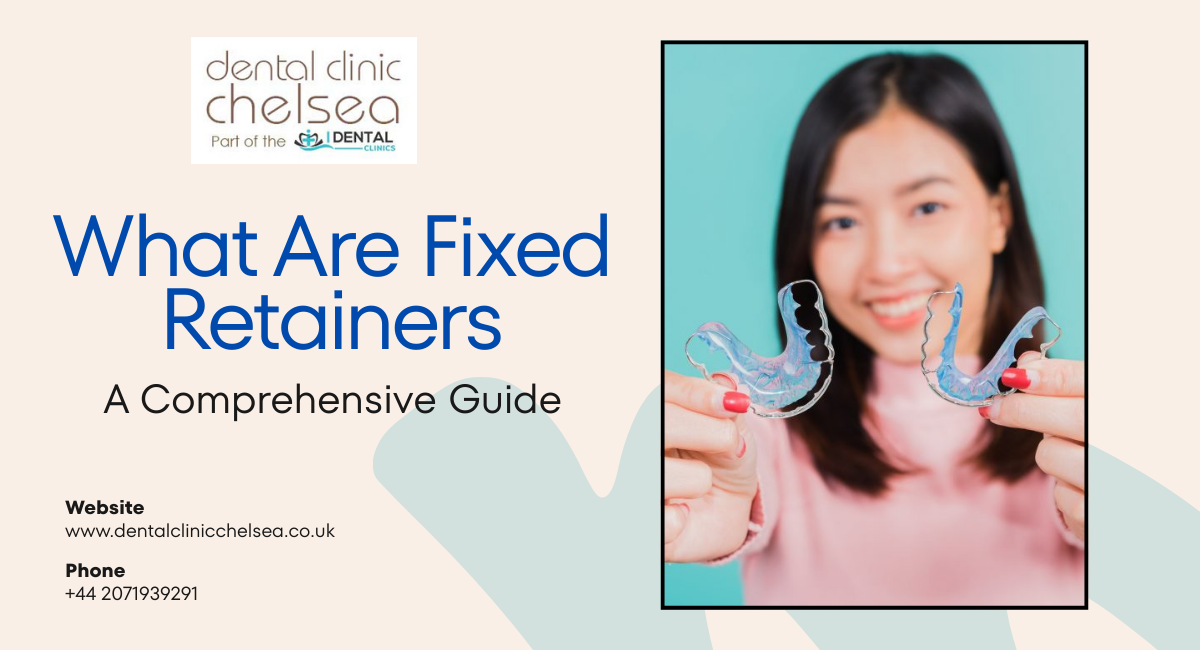
After the braces come off, there is a moment that seems almost unreal. You smile at yourself in the mirror and run your tongue over teeth that finally line up the way you wanted them to. But that’s not the end of the journey; it never is. Without some help, straight teeth won’t stay straight. That’s where the fixed retainer comes in.
When dentists or orthodontists talk about retainers, most of us think of the clear plastic trays that you can put in and take out. Simple, private, and something you might forget about in your bag or leave on a serviette at a café (yes, I did). But fixed retainers are a whole different story. They are usually a thin wire that is glued to the back of your teeth, and they won’t come off without professional help.
But the details are often missed, even though it is something that is literally in your mouth every day. You should really look at how they work, what to expect, and what to do if you have broken retainer. This is what this guide is for.
What is a fixed retainer, really?
It’s like a safety net. Teeth can move back to their old positions after braces have done their job and completed the treatment. To keep avoid this and to put your teeth in check, a fixed retainer is glued to the back of them (sometimes on the upper teeth and often on the lower teeth). You don’t get to choose whether or not to wear it because it’s permanent, at least in practise. It’s always there, doing its job without saying a word or making your life a living hell.
I remember the first day I put my retainers in. I ran my tongue over it for hours. It felt strange, like a piece of wire stuck after eating a big bag of Biltong, but it went away after a week. That’s the pattern most people follow: they become aware, then mildly annoyed, and finally forget everything. Until, of course, something goes wrong.
Why people choose to use fixed retainers
Reliability
You need to be disciplined if you wear removable retainers. If you miss a few nights or “forget” putting them on during the holidays, your teeth might start to move back. A fixed retainer takes that weight off of you. You don’t wake up wondering; did I wear it last night? Because it’s always on job and in place to make sure your teeth don’t go back to their original place.
Discretion
It’s not visible. People won’t notice it unless they are actively looking at the back of your teeth. I have talked to friends who were shocked to find out that I still had mine years after braces.
Peace of Mind for a Long Time
It’s nice to know you don’t have to micromanage. I didn’t think about my retainer at all when I was busy, staying up late, travelling, and eating whatever I could find. But my teeth stayed where they were. That’s the quiet power of a permanent choice.
What Could Go Wrong
A fixed retainer isn’t indestructible, just like anything else stuck to your teeth.
The Problem with a Broken Retainer
You bite into something hard, like a baguette or an apple, and all of a sudden, a sharp edge is scraping your tongue. Or maybe a piece of the wire comes loose. At best, it’s annoying; at worst, it’s harmful. If your retainer breaks, it can collect food, hurt your gums, or push your teeth out of place.
This happened to me once during exam time. I didn’t have time for an appointment or the mental space for dental drama, but I could feel one side lifting. I chewed on the other side for a week before I finally gave in and had it fixed. Not a good idea, but it drove home how important it is to keep things up.
Problems with Cleaning
Flossing is a little harder. You can’t just zip the floss in and out; you need threaders or those tiny brushes to get around the wire. To be honest, I used to be lazy about this. Then, during one check-up, the hygienist showed me how plaque was starting to build up right under the wire. Not fun. It’s possible, but it takes more work.
Wear and Tear
Bonding material doesn’t last forever. The glue can still get weaker, even if you’re careful. Because of this, dentists sometimes call them “semi-permanent.” They are meant to stay in place, but they aren’t immune to time.
How much does it cost?
Let’s be honest and talk about money, since it always comes up in these talks. The fixed retainer cost depends on where you go and how complicated your teeth are. Some people only have one on the front lower teeth, while others have one on both arches.
You’d probably get a clear breakdown before you agreed to anything at a place like Dental Clinic Chelsea. Most people think of the fixed retainer price as an extra cost after getting braces or aligners, not as part of the main treatment cost. Repairs are important too. If your retainer breaks, fixing it may cost more than the original bonding.
If you like numbers, the permanent retainer cost is usually between “doable but annoying” and “okay, that’s an investment.” Not too much, but not a small amount either. Think of it as your smile’s insurance policy: the money you pay up front stops you from having to get braces again years later.
Having a Fixed Retainer
The First Few Weeks
Your tongue will want to explore it all the time. You might have a slight lisp, but most people get used to it in a few days. Eating isn’t really affected, but foods that stick can be a pain.
Daily Upkeep
Brushing is easy, but flossing is harder. I have a bunch of floss threaders in my bathroom and car. It’s a small habit that stops bigger problems from happening.
Going to the dentist
People don’t give this one enough credit. Every time you go in for a cleaning, have your retainer checked. A dentist or hygienist can tell if the wire is coming loose or if plaque is building up. If you haven’t been cleaning around it, they’ll also remind you (sometimes with a look of disapproval).
Should Everyone Have One?
Not always. Some people like removable retainers better because they are more flexible or because their lifestyle makes it hard to clean around a bonded wire. The fixed retainer was worth it for me. I’m not very good at sticking to routines (just look at the stack of unread books on my nightstand), so having something that didn’t depend on my memory was a huge help.
You could skip it if you’re careful, responsible, and don’t mind the responsibility of wearing and cleaning a removable one.
What to do if something seems wrong
Don’t ignore it. Get it checked if the wire feels sharp, if it moves, or if your bite suddenly changes. People have put it off, only to find that their teeth started to move back a little bit. A quick fix at the beginning saves a lot of trouble later.
Final Word
A fixed retainer isn’t very pretty. It doesn’t shine, you don’t show it off, and half the time you forget it’s there. But it works quietly, keeping your smile straight even when things get messy and you lose focus.
I thought it was worth every appointment and every penny of the fixed retainer cost. Even the bad days, like the week when my retainer broke, made me remember how much worse it could have been if I had to start orthodontics all over again.
Think of the permanent retainer cost as a way to protect your future. Your teeth stay where they belong because of the work and money you put in up front. At the end of the day, that peace of mind is hard to beat.
Table of Contents