
Introduction
Accurate planning is the foundation of every successful construction project. Whether you are building a driveway, patio, foundation, or flooring slab, knowing the exact amount of concrete required is critical. This is where tools like the concrete slab calculator and concrete calculator play a vital role.
In construction, even small miscalculations can lead to material waste, budget overruns, and project delays. Concrete calculators help contractors, builders, and homeowners estimate concrete volume precisely, saving time and money. This article explains these tools in a semantic, structured way, showing how they work, why they matter, and how they improve construction efficiency.
Understanding the Concrete Calculator
A concrete calculator is a digital or manual tool used to calculate the volume of concrete required for a specific construction project. It considers measurements such as length, width, depth, and shape to provide accurate volume estimates, usually in cubic yards or cubic meters.
Why Concrete Calculators Are Important
Concrete calculators are essential because:
- Concrete is expensive and heavy to transport
- Overordering increases costs and waste
- Underordering causes delays and extra labor
- Accurate estimates improve project planning
By using a concrete calculator, builders can make informed decisions before purchasing materials.
What Is a Concrete Slab Calculator?
A concrete slab calculator is a specialized type of concrete calculator designed specifically for flat surfaces such as slabs. These include driveways, floors, sidewalks, patios, and building foundations.
How It Works
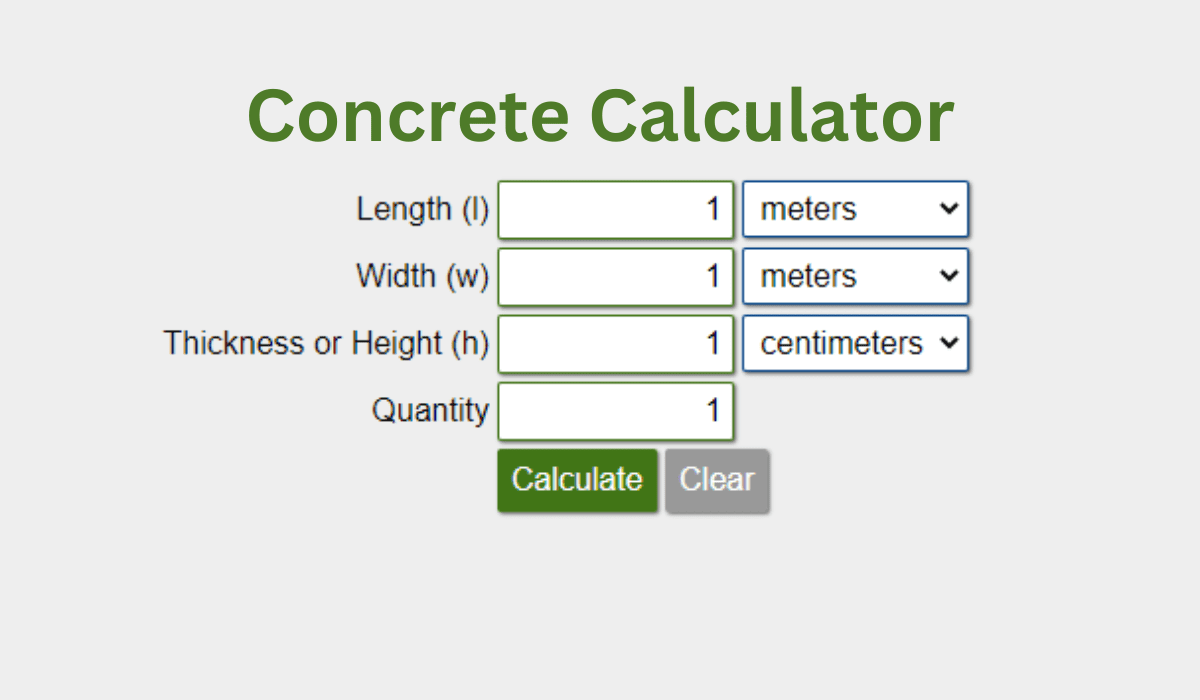
A concrete slab calculator typically requires:
- Slab length
- Slab width
- Slab thickness
Based on these values, it calculates the total volume of concrete needed. Some advanced calculators also factor in waste percentage and reinforcement requirements.
Why Slab Calculations Matter
Slabs must be poured evenly and continuously. Any shortage of concrete during pouring can weaken the slab and compromise structural integrity. A concrete slab calculator ensures consistent material supply.
Semantic Difference Between Concrete Calculator and Slab Calculator
While both tools are related, they serve slightly different purposes.
- A concrete calculator is used for various shapes such as columns, footings, stairs, and slabs
- A concrete slab calculator focuses only on flat, rectangular, or square surfaces
Using the correct calculator ensures higher accuracy and better project outcomes.
Applications of Concrete Calculators in Construction
Concrete calculators are widely used across different construction scenarios.
Residential Construction
Homeowners use concrete slab calculators for:
- Garage floors
- Patios and walkways
- Basement slabs
- Home extensions
These tools allow homeowners to budget accurately and communicate better with contractors.
Commercial and Industrial Projects
In large-scale projects, concrete calculators help with:
- Warehouse flooring
- Parking lots
- Factory foundations
- Structural base slabs
Accurate calculations reduce waste and support sustainable construction practices.
Key Inputs Required for Accurate Calculations
For a concrete calculator to deliver reliable results, accurate inputs are essential.
Length and Width
Measurements should be taken precisely using proper tools. Even small errors can significantly affect the final volume.
Thickness or Depth
Thickness varies depending on the application:
- Sidewalks: usually 4 inches
- Driveways: 4–6 inches
- Structural slabs: 6 inches or more
A concrete slab calculator helps adjust thickness based on usage needs.
Unit Consistency
Measurements should be in the same unit system to avoid miscalculations. Most calculators automatically convert values for accuracy.
Benefits of Using a Concrete Slab Calculator
Using a concrete slab calculator offers multiple advantages beyond basic estimation.
Cost Control
Accurate volume estimates help:
- Avoid unnecessary purchases
- Reduce material waste
- Control project budgets
Time Efficiency
Quick calculations eliminate guesswork and speed up planning phases.
Improved Accuracy
Manual calculations are prone to errors. Digital concrete calculators ensure consistent and precise results.
Concrete Calculators and Material Planning
Concrete calculators also assist in planning related materials.
Cement, Sand, and Aggregate Estimates
Advanced calculators break down concrete volume into:
- Cement quantity
- Sand requirements
- Aggregate volume
This is especially helpful when mixing concrete on-site.
Ready-Mix Concrete Ordering
For ready-mix suppliers, calculators help determine:
- Number of truckloads
- Delivery scheduling
- Pour sequence planning
This improves coordination between suppliers and contractors.
Reducing Waste and Supporting Sustainability
Sustainable construction is becoming increasingly important. Concrete calculators help support eco-friendly practices.
Minimizing Overuse of Materials
Precise calculations prevent excess concrete production, reducing landfill waste.
Lower Carbon Footprint
Concrete production contributes to carbon emissions. Accurate planning reduces unnecessary manufacturing and transportation.
Efficient Resource Management
Concrete slab calculators help builders use resources responsibly and efficiently.
Common Mistakes Without Using Calculators
Skipping calculation tools often leads to problems such as:
- Incorrect slab thickness
- Uneven pours
- Structural weaknesses
- Increased labor costs
Using a concrete calculator eliminates these risks by providing data-driven insights.
Choosing the Right Concrete Calculator Tool
When selecting a calculator, consider:
- Ease of use
- Support for different shapes
- Automatic unit conversion
- Waste factor options
A reliable concrete slab calculator should be intuitive and accurate.
Future of Concrete Calculators in Construction
Technology continues to evolve construction planning tools.
Smart and AI-Based Calculators
Modern tools integrate:
- AI-based recommendations
- Mobile accessibility
- Real-time material pricing
These features further improve accuracy and decision-making.
Integration with Construction Software
Concrete calculators are increasingly integrated into:
- Project management platforms
- Cost estimation tools
- BIM systems
This creates a seamless planning workflow.
Conclusion
Concrete calculators have become essential tools in modern construction, helping builders, contractors, and homeowners plan projects with confidence and precision. The concrete calculator provides a broad solution for estimating material needs across various construction shapes and structures, while the concrete slab calculator focuses specifically on flat surfaces such as floors, patios, and foundations.
Throughout this article, we explored how these calculators work, the types of inputs they require, and the benefits they offer in terms of cost control, accuracy, and efficiency. We also highlighted their role in reducing material waste, supporting sustainability, and preventing common construction mistakes. By using these tools, construction professionals can avoid overordering or underordering concrete, ensuring smooth project execution.
Furthermore, concrete calculators contribute to better material planning by estimating cement, sand, and aggregate quantities, making them valuable for both ready-mix and on-site mixing projects. As construction technology continues to advance, these calculators are becoming smarter, more integrated, and more accessible through digital platforms.
In summary, whether you are planning a small residential slab or a large commercial foundation, using a concrete slab calculator and concrete calculator is no longer optional—it is a necessity. These tools empower users to make informed decisions, save time and money, and deliver durable, high-quality construction results.
Table of Contents